

Line planning GUIDE 17
Fruit and vegetable drying lines: Product form, loading and capacity planning
Specify a fruit and vegetable drying line through product form, incoming condition, loading and the finished target. Compare quotations on equal terms.
Selecting a fruit and vegetable drying line requires the raw material, cut form, inlet condition, loading arrangement and finished target to be defined together. FRUMAK describes cutting products to the required form and drying them in industrial ovens. It also notes that raw material water content can change drying time. Capacity comparison should therefore go beyond oven volume or wet input quantity. Each proposal needs a clearly stated product scenario and operating basis.
The possibility of handling several crops with shared equipment can make a drying investment attractive. However, fruit slices, whole fruit and chopped vegetables are not one product specification. The choices made before loading belong in the original enquiry.
Include feedstock, cut size, incoming moisture and the operating calendar in the enquiry. Check that quoted capacity applies to those conditions. Product-specific process settings and target output properties allow the dryer to be assessed against the daily manufacturing plan.
Specify the physical product rather than only its market name
Saying that a plant will produce dried fruit does not explain the intended shape. Describe the cut, expected size range, accepted appearance and preparation steps. A finished sample can support visual assessment; otherwise, use the product development team's written target.
The cutting section's output and the drying section's inlet must agree. This interface deserves particular attention when equipment comes through separate quotations. State which pieces are acceptable, how others are removed and who prepares the product for loading.
Keep wet input and dry output figures separate
FRUMAK notes that raw material water content can affect drying time. Consequently, capacity should not be read as one unconditional number. The proposal must identify the starting product and the criteria used to define the finished output.
One supplier may quote the quantity of wet material loaded while another refers to recovered dried product. The figure may also describe a batch, an hour or a particular working day. Align the unit and conditions before dividing price by capacity to compare investments.
| Quoted information | Clarification to request | Supporting record |
|---|---|---|
| Input quantity | Which product and initial condition? | Representative raw material information |
| Prepared product | Which cut and size range? | Physical product specification |
| Operating time | Are loading and unloading included? | Complete cycle activity list |
| Output quantity | Which finished target applies? | Product criteria and measurement method |
| Energy information | Which operating conditions support it? | Calculation or trial basis |
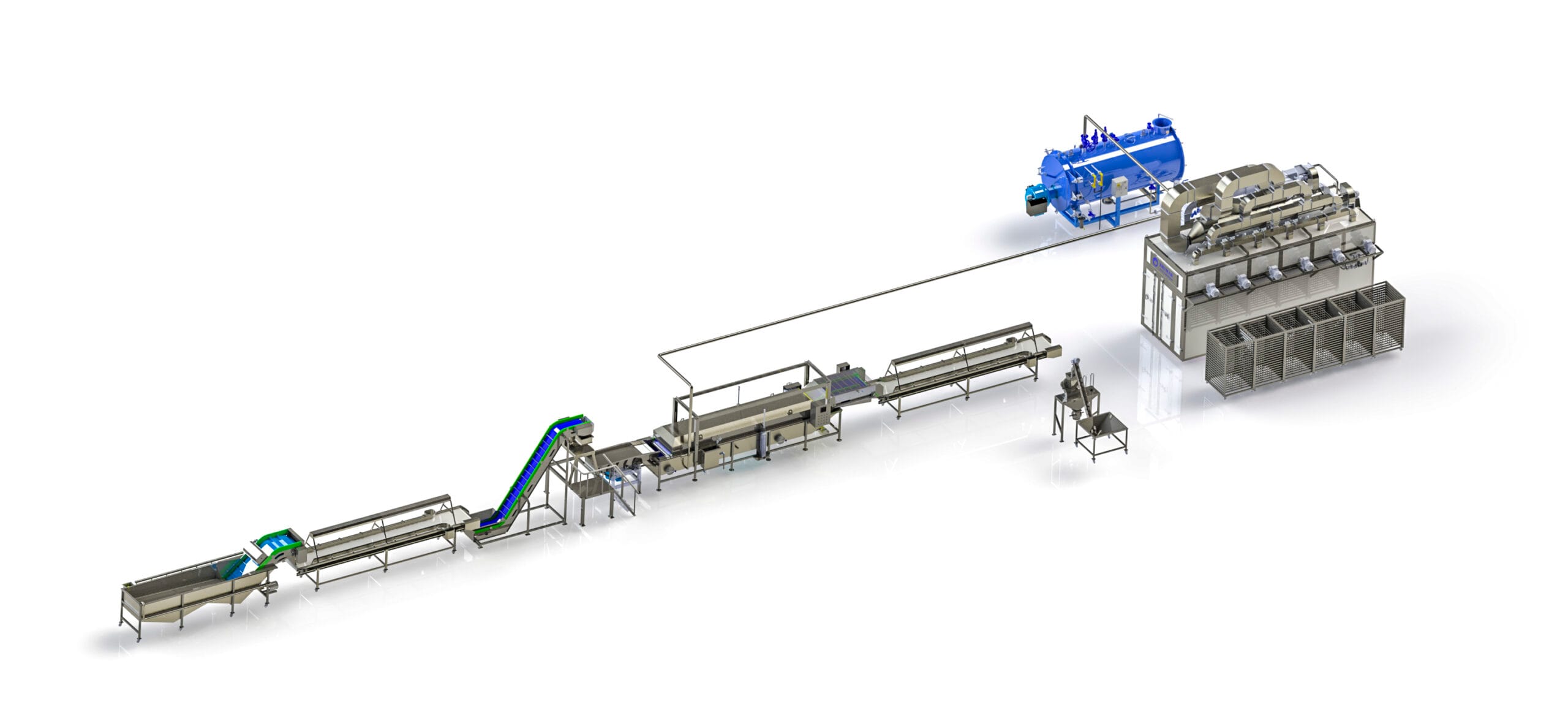
Include loading and unloading in the production day
The working day contains more than the time during which the dryer is active. Preparation, loading, unloading, movement and readiness for the next batch are real production duties. Explain how they will be performed and show operator access and handling equipment in the layout.
Prepared material may be available at the start of a shift while the cutting section struggles to keep up later. Simply selecting a larger dryer may not resolve that imbalance. A schedule showing when each section supplies and receives product makes the problem easier to assess.
- Request separate records for preparation, loading, drying and unloading.
- Show operator and material movements on the layout.
- Reserve an identified area for preparing the next batch.
Assess each planned product through its own scenario
A manufacturer might process fruit during one season and vegetables during another. List each product's form, preparation and production objective separately. Discuss the limits of shared equipment against that list instead of relying on the broad category of fruit and vegetables.
Distinguish the initial product range from possible future additions. Acceptance should cover the products actually included in the purchase. An untested future crop should not enter the investment calculation as though its capacity and final quality have already been demonstrated.
Define what happens after the dryer
The scope should explain how dried product is moved, where it is assessed and how it proceeds towards packaging. The manufacturer's qualified team establishes the finished specification. Product safety or shelf life cannot be inferred solely from a machinery description.
An effective enquiry to FRUMAK brings together representative raw material, the proposed cut, the finished target, the operating calendar and available space. Linking trial inlet and outlet records to the same batch provides a stronger basis for comparison and later process improvement.
KEY POINTS
Before requesting a quotation
- Specify inlet condition, cut form and outlet target separately.
- Count handling activities within the real production schedule.
- Make quotations comparable through product-specific scenarios.
QUESTIONS AND ANSWERS
Frequently asked questions
Will all fruits dry in the same time?+
FRUMAK states that raw material water content can create differences in drying time. Product form and the finished target also need definition; one general duration should not be used for every product.
How should capacity be requested?+
State wet input and target dry output separately, with an explicit batch or time basis. Ask whether loading and unloading are included in the proposed operating period.
Is a product photograph enough for selection?+
It can help communicate shape, but it cannot replace raw material condition, cut dimensions, production schedule and the finished specification. Representative samples and measurements are still needed.
Sources and product information
The following pages document product specifications and equipment scope. Capacity, product suitability and the final supply scope need to be agreed in a project-specific proposal.
Editorial principlesRelated articles
 08
Line planning 5 min read
Plan a fruit juice line from incoming fruit to the finished bottle
Define fruit preparation, pressing, thermal processing and bottling as connected parts of a juice project, with clear product and packaging requirements.
Cansu Yören 09
Process & product 5 min read
Fruit preparation: Decide between pieces, purée and juice first
Plan fruit preparation around the required product form, with clear washing, sorting, stone separation and extraction duties before the next processing stage.
Oğulcan Cağman 25
Machine selection 5 min read
Fruit Processing: Selecting Screens and Extractors for the Intended Product
Choose fruit-processing equipment around the required output, from separated fruit flesh to pulp. Prepare useful screening, extraction and acceptance trials.
Fatih Selvi