

Line planning GUIDE 08
Plan a fruit juice line from incoming fruit to the finished bottle
Define fruit preparation, pressing, thermal processing and bottling as connected parts of a juice project, with clear product and packaging requirements.
A fruit juice project involves more than selecting a press or filler. Incoming fruit preparation, juice extraction, the defined thermal process, packaging and subsequent product handling must be considered together. FRUMAK's official line describes pressing, pasteurisation and filling. State which fruits, product structures and packaging formats are included, and do not assume that every fruit produces the same result through an identical equipment configuration.
A short equipment list rarely captures the full raw material range of a juice factory. Will the business process one fruit, change products with the seasons or run several bottles through one line? These questions affect both the beginning and end of the project.
Identify the fruit, its condition on arrival and the intended drink and packaging before requesting a quotation. Processing, storage and shelf-life requirements need validation for the specific formulation and pack. These requirements define the duties of both preparation and filling equipment.
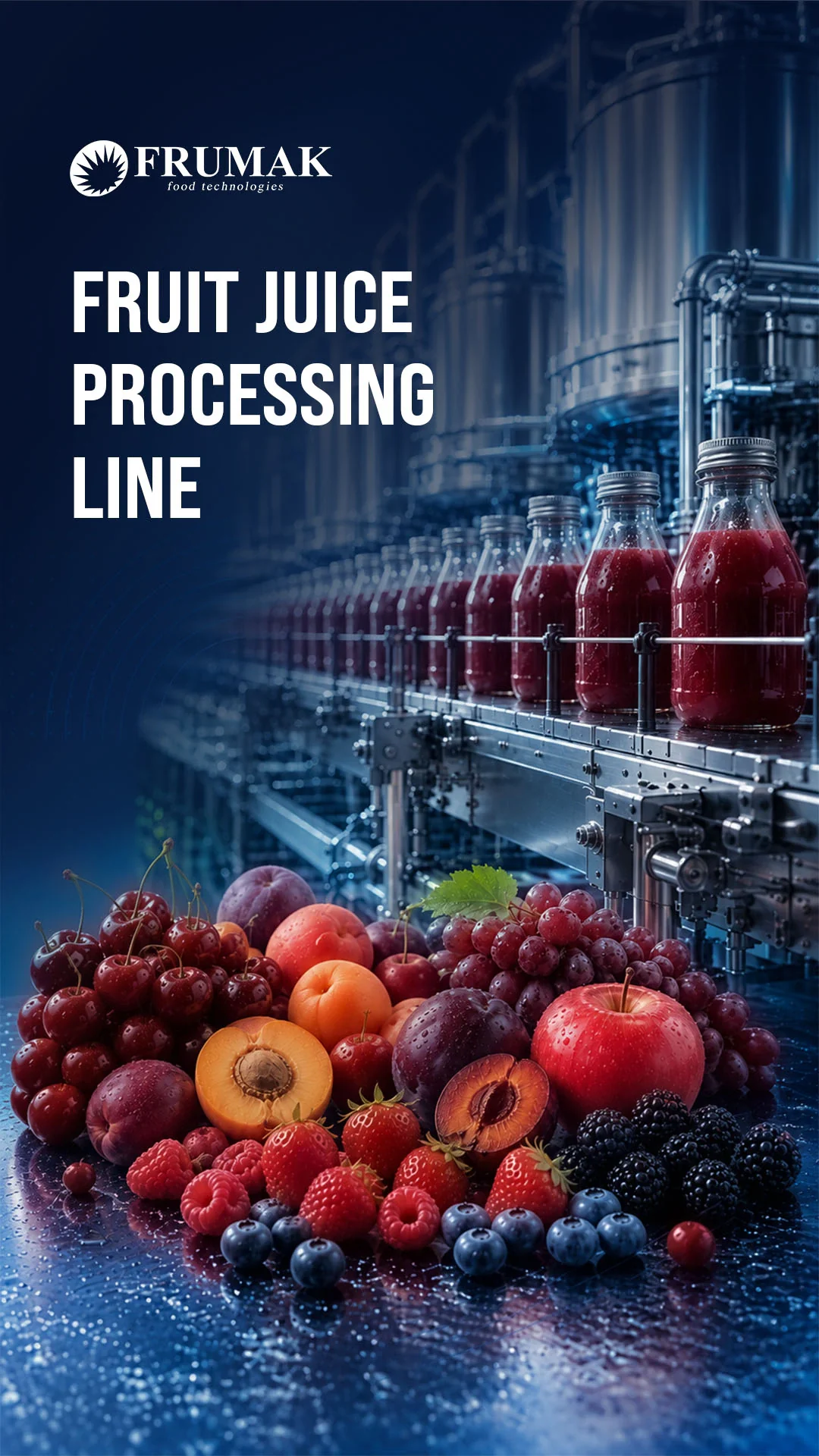
Connect the fruit list to the intended beverage
Listing apples or peaches is a useful start but not a finished product specification. Describe the condition in which fruit arrives and the product that should leave the line. The quality team can define appearance, structure and packaging requirements. Different fruits should not be assumed to need identical preparation or separation.
For a business processing apples during one part of the season and stone fruit during another, ask where the routes are shared and where they differ. A trial using only the easiest fruit may not represent the complete range. Record which fruits are covered and which require further review.
Clarify the boundary between preparation and juice processing
FRUMAK's fruit preparation description includes washing, sorting, cutting and pressing, while its juice line describes pressing, pasteurisation and filling. Similar stage names across product categories do not establish what is included in a particular commercial proposal. Each operation and its supply package need to be identified.
If the new section connects to an existing preparation line, provide its actual outlet conditions. Show the transfer responsibility and what happens when either section stops. A new factory should be reviewed from receiving onward on one process diagram.
| Scenario | Decision point | Technical question |
|---|---|---|
| Single-fruit operation | Defined incoming and finished products | Which fruit batch represents the trial? |
| Seasonal fruit changes | Different preparation requirements | Which components are shared or fruit-specific? |
| Extension to an existing line | Interface between supplied sections | How are outlet and inlet conditions matched? |
| Several bottles | Filling and downstream changeover | Which packaging samples are included in evaluation? |
| Stop and restart | Intermediate product handling | Which operator actions stop each section? |
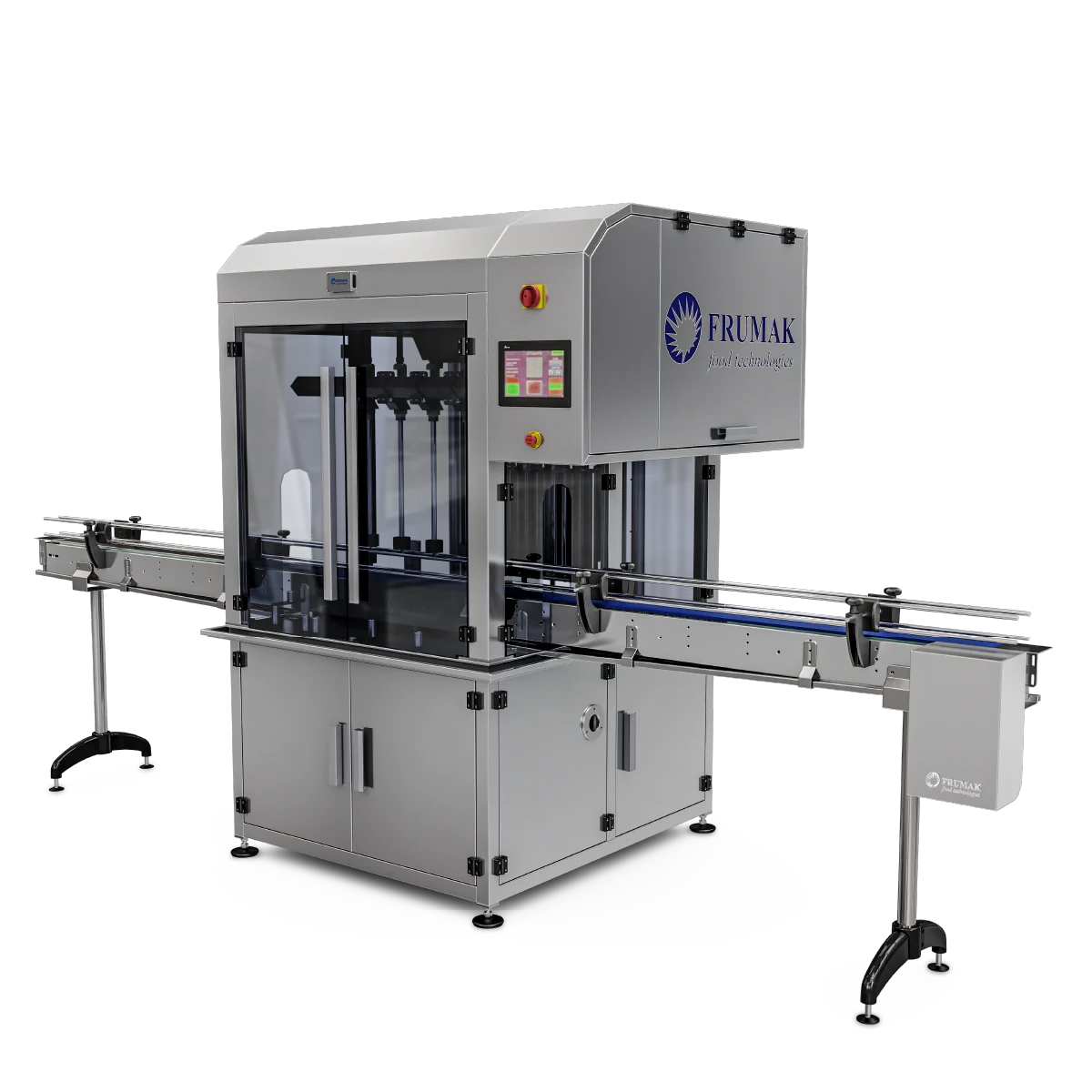
Review thermal processing together with packaging
The FRUMAK fruit juice line includes pasteurisation. Its presence does not establish one shelf life or storage condition for every juice and bottle. Product, processing, filling and packaging require coordinated review. Monitoring and recording requirements should be defined with the quality plan.
Present the target beverage, distribution scenario and packaging rather than requesting an arbitrary temperature. The responsible team can then define the validation scope. Distinguish equipment control functions from finished-product quality evaluation so that machine delivery and product acceptance responsibilities remain understandable.
Choose filling around the real beverage and bottle
FRUMAK distinguishes volumetric and flowmeter filling options and states that its flowmeter alternative is not intended for particulate products. Product structure must therefore be described before choosing filling technology. Bottle opening and required filling range should be reviewed at the same time.
If packaging changes during the day, show adjustments in filling, transport and closing on one operating schedule. Discuss how upstream product is managed when bottles or downstream equipment are unavailable. This moves the review beyond one machine's speed and toward the actual production day.
Prepare a concise but complete technical brief
Provide the fruit list, incoming conditions, target beverage, bottle samples and building information. Where equipment already exists, include the conditions under which it is actually used. A nominal rating alone does not explain the current product or shift arrangement.
Request a process diagram, excluded works and acceptance plan alongside the equipment list. Include cleaning access, maintenance, product changes and operator training in delivery discussions. This treats the full fruit-to-bottle chain as one coordinated investment rather than a set of unrelated equipment purchases.
KEY POINTS
Before requesting a quotation
- Describe fruit, beverage and packaging requirements together.
- Make preparation and downstream supply boundaries explicit.
- Evaluate processing, filling and storage within one product scenario.
QUESTIONS AND ANSWERS
Frequently asked questions
Can every fruit use the same juice line?+
Universal compatibility should not be assumed. Preparation, separation, target product structure and filling requirements need fruit-specific review.
Does pasteurisation equipment determine shelf life by itself?+
No. Product, process, packaging, filling and storage conditions must be validated together. Equipment presence is not a common shelf-life guarantee.
Can a new section connect to existing preparation equipment?+
That can be evaluated technically. Existing outlet conditions, operating capacity, transfers and responsibility boundaries need to be matched to the new scope.
Sources and product information
The following pages document product specifications and equipment scope. Capacity, product suitability and the final supply scope need to be agreed in a project-specific proposal.
Editorial principlesRelated articles
 25
Machine selection 5 min read
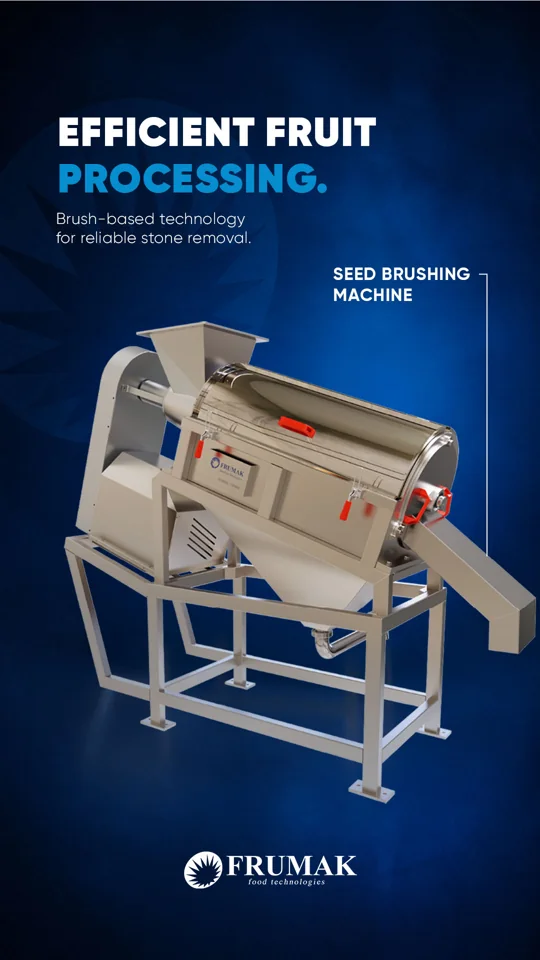
Fruit Processing: Selecting Screens and Extractors for the Intended Product
Choose fruit-processing equipment around the required output, from separated fruit flesh to pulp. Prepare useful screening, extraction and acceptance trials.
Fatih Selvi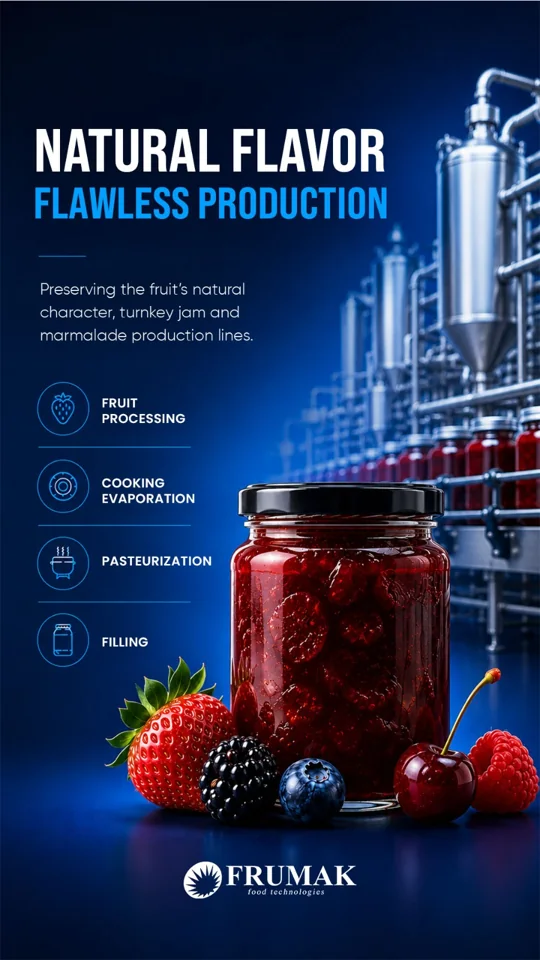 02
Line planning 5 min read
Choosing a jam and marmalade line starts with the fruit's final form
Compare jam and marmalade lines through fruit form, raw material supply, vacuum cooking, filling compatibility, utilities and realistic product changeovers.
Cansu Yören 07
Line planning 5 min read
Choosing a honey line around incoming product and packaging
Evaluate honey processing through incoming material, filtration, controlled heating, filling and closure compatibility, with product-based acceptance questions.
Fatih Selvi