

Line planning GUIDE 07
Choosing a honey line around incoming product and packaging
Evaluate honey processing through incoming material, filtration, controlled heating, filling and closure compatibility, with product-based acceptance questions.
A honey processing line should be selected after defining the incoming honey and intended packaging. Filtration, controlled heating, transfer and filling are separate duties whose purpose needs to be clear in the proposal. FRUMAK's honey range considers these processing and packaging stages together. Actual samples, batch changes and acceptance criteria provide a more useful purchasing basis than general promises about quality or an isolated filling speed.
Honey equipment discussions often begin with jar size and filling speed. However, the condition of the product reaching the filler must also be explained. Supply packaging, incoming batch handling and the intended pack range should be visible at the start of the project.
Prepare your enquiry with the incoming honey characteristics, intended packs and daily production plan. The responsible process and quality teams should establish heating, holding and acceptance conditions for the specific product. Equipment selection and trials can then be assessed against the same requirements.
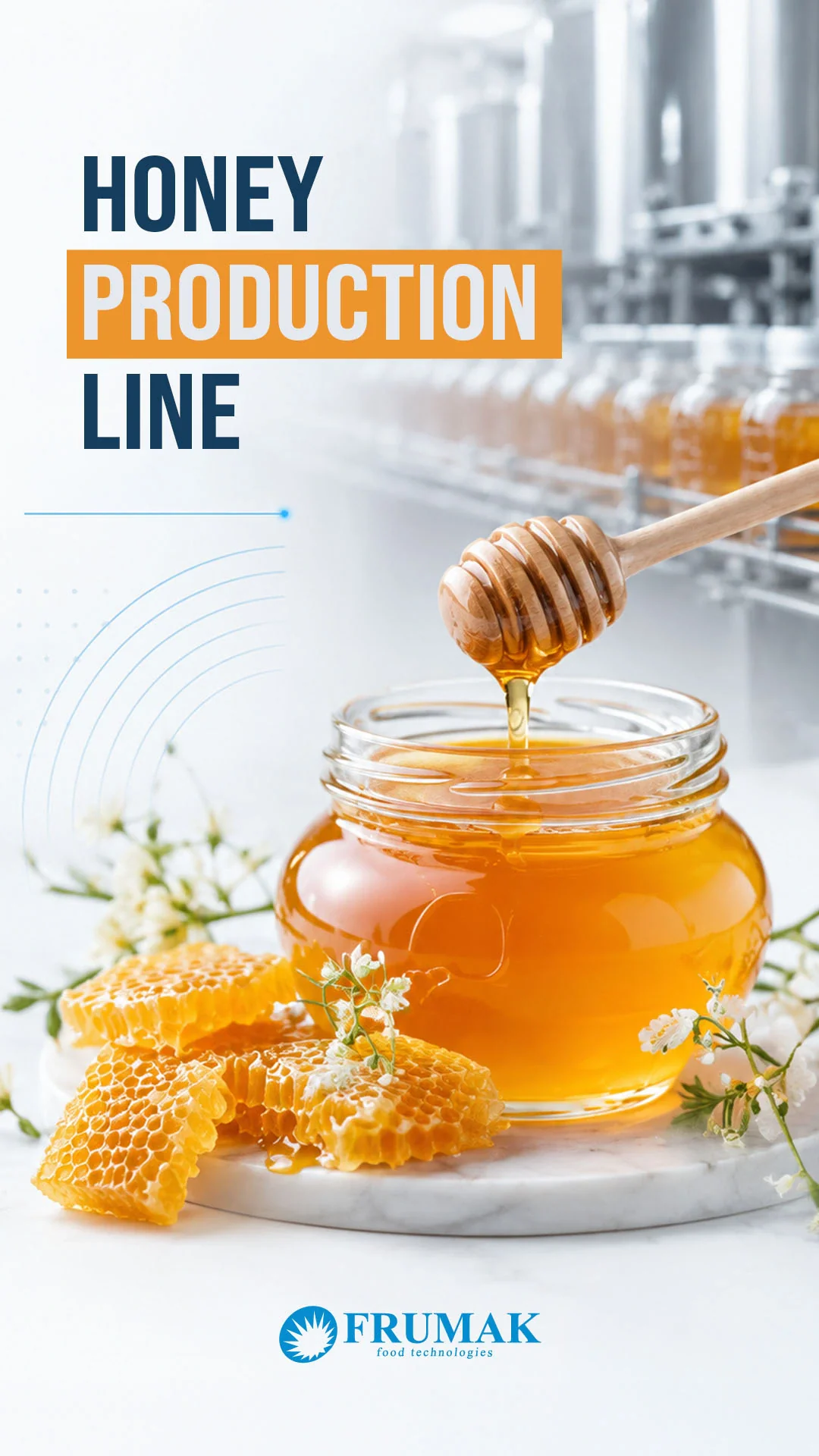
Describe how honey reaches the factory
A product name alone is not an incoming-material specification. Explain the supply container, storage arrangement and the way honey will enter the quoted equipment. Representative samples provide a firmer discussion basis than a broad description such as thick or fluid.
For a business packing separately identified batches, describe how the relationship between incoming material and finished jars should be recorded. Also discuss product remaining in the line during a batch change. These questions do not imply a certification claim; they translate the operating requirement into automation, documentation and material-handling scope.
Ask separate questions about filtration and heating
FRUMAK's honey description includes filtration, controlled heating and packaging. Ask what each stage does in your particular offer. Access, cleaning and transfer are relevant to filtration, while controlled parameters and required records need separate discussion for heating. The presence of a processing stage does not, by itself, prove every desired product attribute.
Do not assume one temperature and holding time apply to every honey. Request a validation approach tied to the samples, target properties and your quality plan. This turns broad quality language into a discussion of what will actually be observed or measured.
| Decision area | Project question | Information to request |
|---|---|---|
| Receiving and transfer | How will honey enter from its supply container? | Feeding scope and sample definition |
| Filtration | Which duty is being evaluated under which product conditions? | Equipment selection and maintenance access |
| Controlled heating | Which parameters are monitored and recorded? | Control functions and validation plan |
| Filling | Which jars and fill ranges are included? | Review with packaging samples |
| Batch change | How is residual product managed? | Operating and recording scenario |
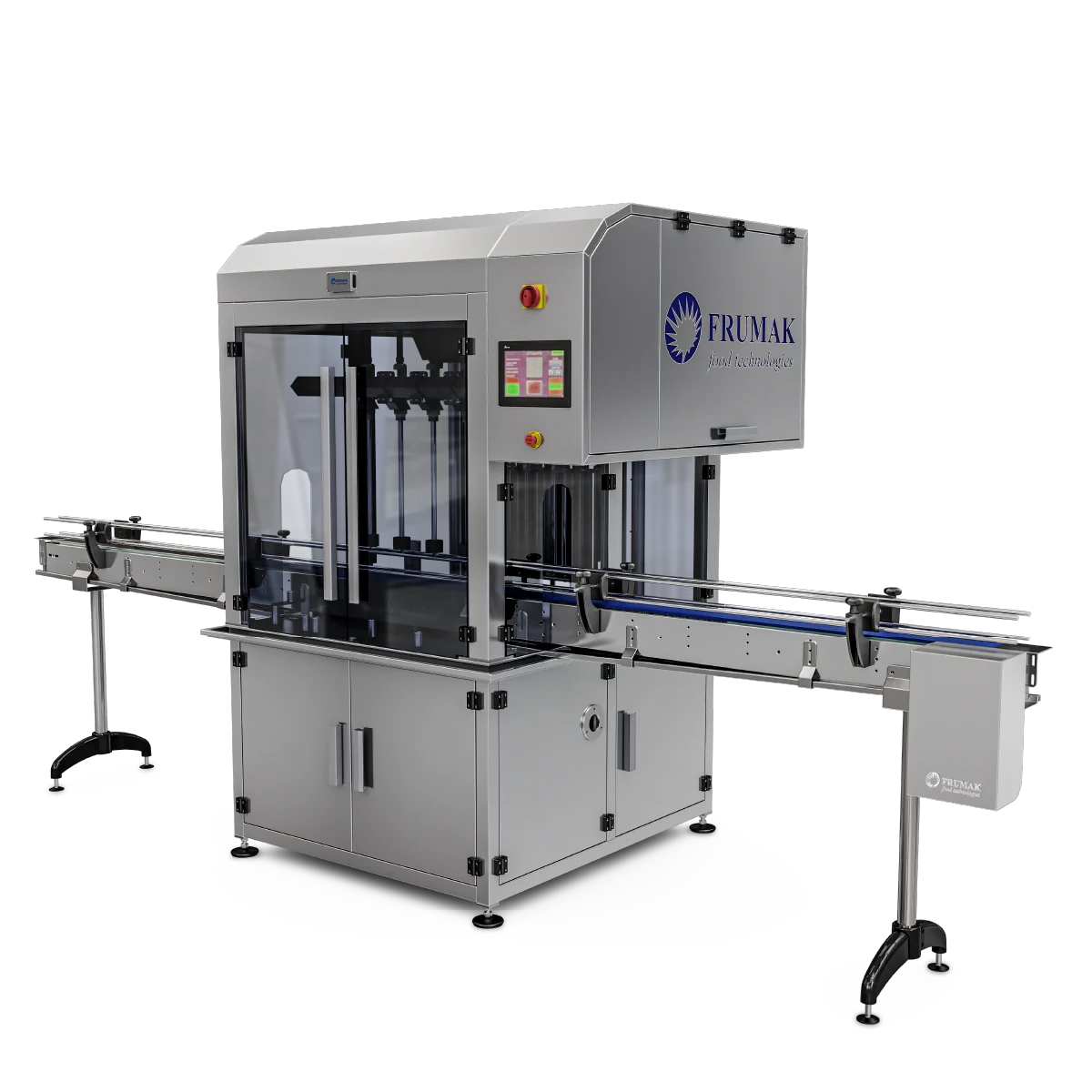
Evaluate the jar together with the filler
Jar volume is only one packaging input. The opening, closure and handling arrangement also need review. FRUMAK describes volumetric and flowmeter filling alternatives. The suitable configuration should be discussed using actual honey and packaging samples rather than selected only by nozzle count.
If small and large jars are planned on the same day, request the adjustment and change-parts list. Where closing equipment is a separate supply item, record that boundary. A useful evaluation follows the intended product and jar through the proposed sequence; running an empty machine is not equivalent evidence.
Plan what happens when filling pauses
A delay in jars, caps or downstream handling can interrupt the flow from upstream processing. Describe normal operation and interruption scenarios. Agree where product is held, which section stops and which actions the operator takes to restart.
Put the first batch, packaging change and next batch on an example production schedule. Assess the full sequence rather than treating one machine's nominal rating as factory capacity. This is particularly useful when the business handles several packaging formats or keeps batch identities separate throughout production.
Complete the enquiry with samples and acceptance boundaries
Bring incoming honey samples, supply packaging details, intended jars and a representative production schedule to the first meeting. Mark which stages are supplied by the project and which rely on existing equipment. Consider layout, utilities, cleaning access and maintenance within the same review.
Agree the trial product and the attributes to be evaluated before ordering. Ask for a defined measurement and responsibility plan instead of unverified shelf-life, loss-free processing or identical-result promises. A well-prepared proposal explains how the business will operate, not merely which equipment will be delivered.
KEY POINTS
Before requesting a quotation
- Define incoming honey and batch handling at the supply boundary.
- Assess filtration, heating and filling as separate duties.
- Include actual packaging and interruption scenarios in the enquiry.
QUESTIONS AND ANSWERS
Frequently asked questions
Is a honey line only a filling machine?+
The project may include filtration, controlled heating, transfer and packaging as separate duties. The necessary stages depend on incoming honey and the intended product.
Can every honey use the same heating settings?+
A universal setting should not be assumed. Product-specific processing conditions require validation by the responsible technical team.
Is jar volume enough for a filling enquiry?+
No. Share the opening and closure, required fill range, product sample and packaging changeover scenario together.
Sources and product information
The following pages document product specifications and equipment scope. Capacity, product suitability and the final supply scope need to be agreed in a project-specific proposal.
Editorial principlesRelated articles
 15
Line planning 5 min read
Planning a hummus production line: Tahini supply, product texture and filling
Define a hummus line through chickpea preparation, tahini supply, texture and packaging. Separate the verified product scope from future product ideas.
Oğulcan Cağman 19
Line planning 5 min read
Planning a cosmetic process line: From visual concept to verified scope
Plan a cosmetic process line through formulation, contact materials, cleaning and packaging. Distinguish a visual concept from verified suitability.
Fatih Selvi 20
Line planning 5 min read
Food filling and capping lines: Assess the product and package together
Compare food filling and capping options through product behaviour, particles, package formats and changeovers. Establish a clear purchase and trial scope.
Cansu Yören