

Line planning GUIDE 13
Planning a fruit molasses line: Fresh and dried raw material routes
Compare fresh and dried fruit routes for a molasses production line. Define preparation, extraction, evaporation, utilities and the purchase scope.
The first planning decision for a fruit molasses line is whether it will receive fresh or dried raw material. FRUMAK describes a water-assisted extraction preparation for dried products, while fresh fruit follows a preparation and mash production route. Filtration and vacuum concentration are then assessed against the resulting feed. A useful specification connects the raw material family, batch programme, finished product requirements, utilities and filling plan instead of treating every molasses product as an identical process.
Grape, mulberry, date and carob molasses share a broad finished product category, but they do not arrive at the factory in the same condition. A common concentration concept does not mean that all front-end preparation equipment will also be common.
A strong investment file shows which products will run during each period and where the proposed routes join or separate. Existing production requirements and future additions can then be discussed through an explicit scope.
Draw separate starting routes for fresh and dried products
FRUMAK includes dried grapes, dried mulberries, carob and dates within its dried-product description. It explains the addition of water to obtain soluble material from the raw ingredient. The fresh route instead begins with preparation and obtaining mash from the fruit.
Create two starting scenarios showing reception, preparation, liquid recovery and separated solids. Only then identify the stages that can realistically be shared. This avoids copying an equipment list from another project without explaining which duties are necessary for the proposed raw materials.
Make dried-fruit preparation a visible part of the schedule
Water additions and the required preparation period belong to the manufacturer's defined process. The purchasing question is how those established duties translate into equipment requirements, batch timing and transfer arrangements.
An operation running one raw material through successive batches has a different schedule from one changing products frequently. In the first case, continuity of preparation and transfer needs attention. In the second, emptying and cleaning duties must be examined alongside the product changes.
- Identify the beginning and end of each batch.
- Connect water and raw material records to the same batch identity.
- Specify the route used to remove and handle separated solids.
Assess the evaporator together with site utilities
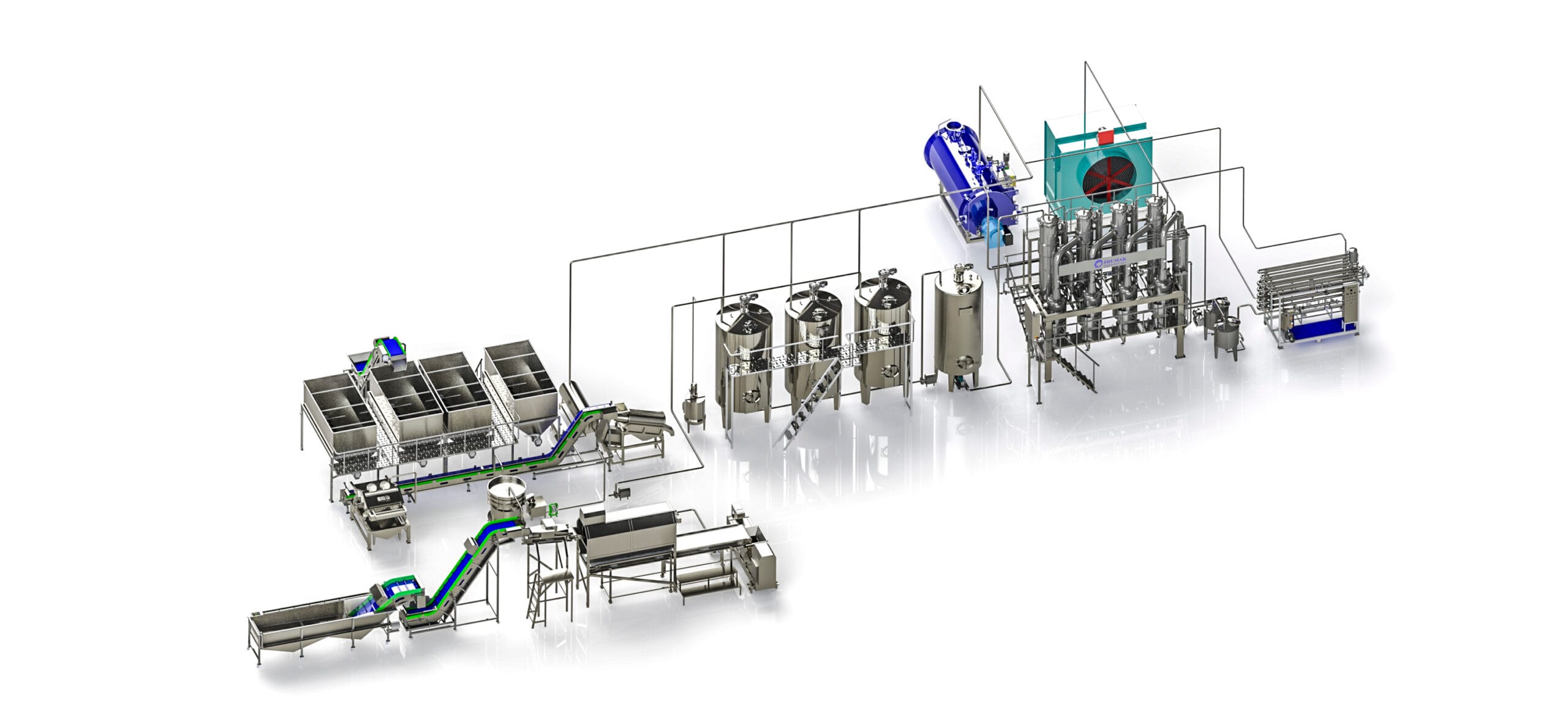
FRUMAK describes its falling-film evaporator as concentration equipment used in molasses processing, with liquid moving as a thin film over tube surfaces. Evaluating that equipment requires more than copying a catalogue value. Feed properties, the finished target and available site services belong in the same assessment.
Request the connection points and responsibilities for steam, water, electricity and any other required services. Compare the proposed requirements with the existing plant arrangement. An item can be mechanically ready while installation remains incomplete because utility work or connection responsibilities were never assigned.
Separate today's purchase from tomorrow's product idea
A manufacturer may plan grape molasses initially and date molasses later. The first product's assessed scope should be distinguished from preparation changes or additional equipment that may be needed for the second. A broad promise of future flexibility is less useful than a list of assumptions to revisit.
The acceptance plan should test the actual purchased scope. Bring representative raw materials, the finished specification, batch records and packages into one file. This helps quotation comparison and gives commissioning teams a shared understanding of the product and operating schedule they are expected to demonstrate.
KEY POINTS
Before requesting a quotation
- Define fresh and dried starting routes separately.
- Assess concentration equipment and site utilities in one scope.
- Distinguish future products from the verified purchase requirements.
QUESTIONS AND ANSWERS
Frequently asked questions
Can fresh and dried fruit use one molasses line?+
Shared stages can be evaluated, but preparation and liquid recovery differ. Each raw material and proposed process route must be assessed before suitability is confirmed.
What information belongs in a molasses line enquiry?+
Include raw material type and condition, production calendar, batch programme, available feed measurements, finished product requirements, packages and existing utilities.
Why is a catalogue capacity insufficient?+
Its product basis, measurement point and operating period must be understood. One equipment figure cannot represent complete line output without preparation and filling requirements.
Sources and product information
The following pages document product specifications and equipment scope. Capacity, product suitability and the final supply scope need to be agreed in a project-specific proposal.
Editorial principlesRelated articles
 12
Process & product 5 min read
Pomegranate molasses production line: Planning from fruit intake to filling
Plan pomegranate molasses production from fruit intake through filtration, concentration and filling, using clear product and seasonal operating data.
Oğulcan Cağman 20
Line planning 5 min read
Food filling and capping lines: Assess the product and package together
Compare food filling and capping options through product behaviour, particles, package formats and changeovers. Establish a clear purchase and trial scope.
Cansu Yören21Machine selection 5 min read
Choosing a Vacuum Cooker: From Recipe to Production Capacity
Choose a vacuum cooker using your recipe, batch size, full cycle time and utility requirements. Build a practical specification and a clear acceptance plan.
Oğulcan Cağman