

Process & product GUIDE 03
Defining a chocolate and spreadable cream production project
Plan a spreadable cream line around product scope, refining requirements, recipe changes and packaging rather than treating all chocolate applications alike.
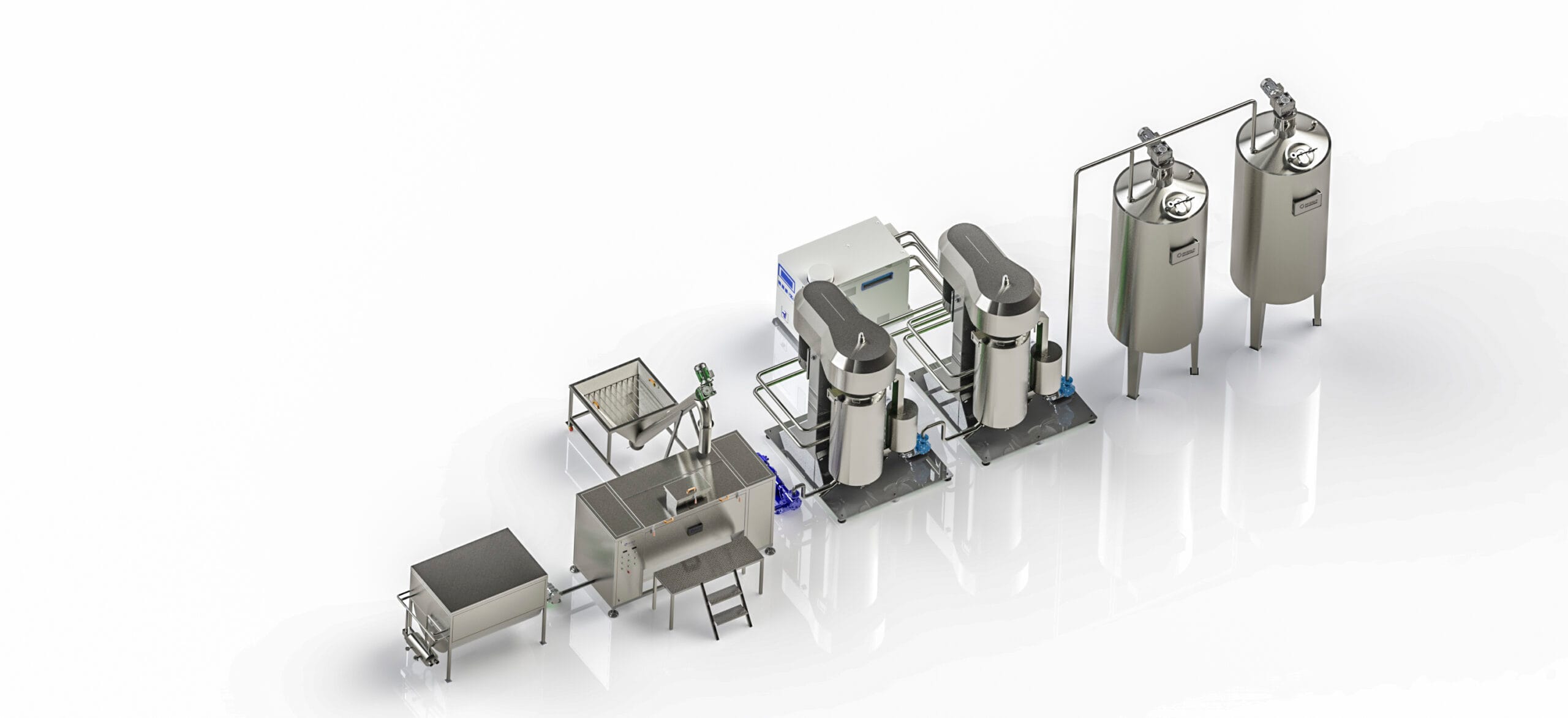
A chocolate spread or nut cream line should be planned around the intended formulations and finished-product structure. A ball mill is one possible component for refining and achieving a homogeneous product; it does not define the whole factory. Hazelnut, pistachio, almond, cashew and date-based products require individual consideration of preparation, transfer, changeovers and filling. A spreadable product project should not be confused with a moulded chocolate project.
The phrase chocolate factory can hide very different expectations. One buyer may mean a jarred chocolate spread, while another means moulded bars. The FRUMAK range discussed here is its spreadable cream line, which lists chocolate cream and several nut- and date-based spreads.
A useful enquiry therefore explains more than product names. Describe incoming ingredients, the desired finished structure, the packaging and the sequence in which different products will run.

Separate spreads from other chocolate applications
The presence of cocoa does not make two products identical equipment applications. Packaging and intended use are starting requirements for a spreadable cream project. Moulding, coating or another chocolate operation should be raised as a separate requirement rather than assumed to be included.
Create a short product matrix showing the main formulation, alternatives, target structure and pack type. A change from hazelnut to pistachio cream is more than changing a recipe name. Ingredient supply, residual product management and filling behaviour must be considered within the proposed scope.
Evaluate the ball mill against an agreed product target
FRUMAK describes its ball mill as refining product with balls to obtain a homogeneous structure. That establishes the machine's stated function, but it does not establish the same fineness or processing time for every formulation. Agree the target and how it will be evaluated in the project.
Provide incoming ingredients together with a reference finished product. Identify who approves the sample and which evaluation method is used. Also review the machine's utility requirements. A layout based only on its floor footprint can miss the services and access needed for the selected configuration.
Make differences between recipes visible
When several spreads are planned, selecting equipment around the easiest formulation can leave important questions unanswered. Identify which operations are shared and which require a different approach. Mark unresolved issues before the proposal is finalised so that later scope changes have a clear explanation.
| Product scenario | Difference to explain | Requested review |
|---|---|---|
| Chocolate spread | Incoming ingredient form and target structure | Refining and transfer scope |
| Hazelnut and pistachio creams | Consecutive production of different recipes | Cleaning, residual product and changeover plan |
| Date cream | Physical form of the supplied ingredient | Feeding and process suitability |
| Jars and another pack format | Opening, fill range and downstream handling | Evaluation with packaging samples |
Look beyond the recipe selection screen
Separate recipe names in automation do not prove that the physical changeover is complete. Ingredient feeding, transfer lines and filling equipment may contain material from the previous product. Your quality and allergen management requirements need to inform the technical project; they cannot be resolved by equipment naming alone.
Discuss a real sequence of products. Which product runs first? Which components must be accessed? How is material remaining in the line handled? How does the operator confirm completion? These questions provide more practical information than a demonstration of a control-panel screen. Cleaning methods and acceptance conditions require responsible technical review.
Assess the product in its final packaging
Evaluation should continue beyond the mill outlet. Transfer, filling and downstream handling form part of the intended production scenario. FRUMAK describes volumetric and flowmeter filling alternatives; suitability should be discussed using actual product properties and packaging, rather than broad labels such as fluid or thick.
Include formulations, packaging samples, the production sequence and acceptance conditions in the enquiry. State which recipe will represent the refining application, which equipment is excluded and where utility responsibilities end. This converts general quality language into practical purchasing questions tied to the spread your business intends to sell.
KEY POINTS
Before requesting a quotation
- Define the intended chocolate application explicitly.
- Link refining requirements to samples and acceptance criteria.
- Plan recipe changes through transfer and filling as well as processing.
QUESTIONS AND ANSWERS
Frequently asked questions
Does this range automatically include chocolate bar production?+
No. The FRUMAK line is intended for spreadable creams. Moulding, coating or another chocolate application needs a separate scope discussion.
What is the ball mill's stated purpose?+
FRUMAK describes refining with balls to obtain a homogeneous product. The target result and evaluation method must be agreed for the formulation.
Can different nut creams be considered within one project?+
Yes, they can be assessed together, but shared equipment, cleaning, changeovers and packaging compatibility need project-specific review. A product family name does not establish unlimited compatibility.
Sources and product information
The following pages document product specifications and equipment scope. Capacity, product suitability and the final supply scope need to be agreed in a project-specific proposal.
Editorial principlesRelated articles
 22
Machine selection 5 min read
Choosing a Ball Mill for Spreads: Product Trials and Plant Requirements
Assess a ball mill against your spread recipe, target fineness, capacity and cooling system. Prepare a useful product trial and a comparable equipment enquiry.
Fatih Selvi 29
Investment guides 6 min read
Choosing a Food Machinery Supplier: An Evidence-Based Checklist
Compare food machinery suppliers through product trials, technical scope, service and handover records. Use a neutral checklist to evaluate equivalent offers.
Cansu Yören30Investment guides 5 min read
Pilot Trials, FAT and SAT: Planning Production Line Acceptance
Give pilot trials, factory acceptance and site acceptance distinct objectives. Plan product samples, measurements, open items and handover records before testing.
Oğulcan Cağman