

Process & product GUIDE 05
Sesame processing stages and the boundaries of each machine
Understand sesame dehulling, screening, rinsing and drying as separate duties, and define the right scope for white sesame, simit sesame or tahini input.
A sesame processing line should be evaluated against its intended output: white sesame, simit sesame or an input for tahini production. Dehulling, screening, rinsing and drying are connected duties, not interchangeable operations. FRUMAK states that this line is specifically for sesame and is not suitable for processing other seeds. Define the incoming sesame, target output and subsequent process before deciding how the equipment should be arranged.
Similar-looking machines can have different responsibilities in sesame preparation. Removing hulls, separating unwanted material, removing bran from the sesame surface and drying washed product are separate tasks. Calling all of them cleaning does not establish where each duty begins or ends.
Read the equipment range through incoming and outgoing product conditions. This makes the proposed flow easier to discuss than a list of machine names alone.
Separate white sesame, simit sesame and tahini input
FRUMAK presents white sesame processing and simit sesame processing as distinct routes. Its description explains how roasting can be added to the white sesame route for tahini production, while stating that simit sesame is not used to produce tahini. Do not assume one universal configuration covers all outputs without review.
State the intended use as well as the commercial product name. Preparing sesame for bakery use, supplying a tahini process and making simit sesame create different expectations. Where several outputs are required, show shared equipment and diverging routes on the process drawing, with separate acceptance examples.
Compare screens by their stated job
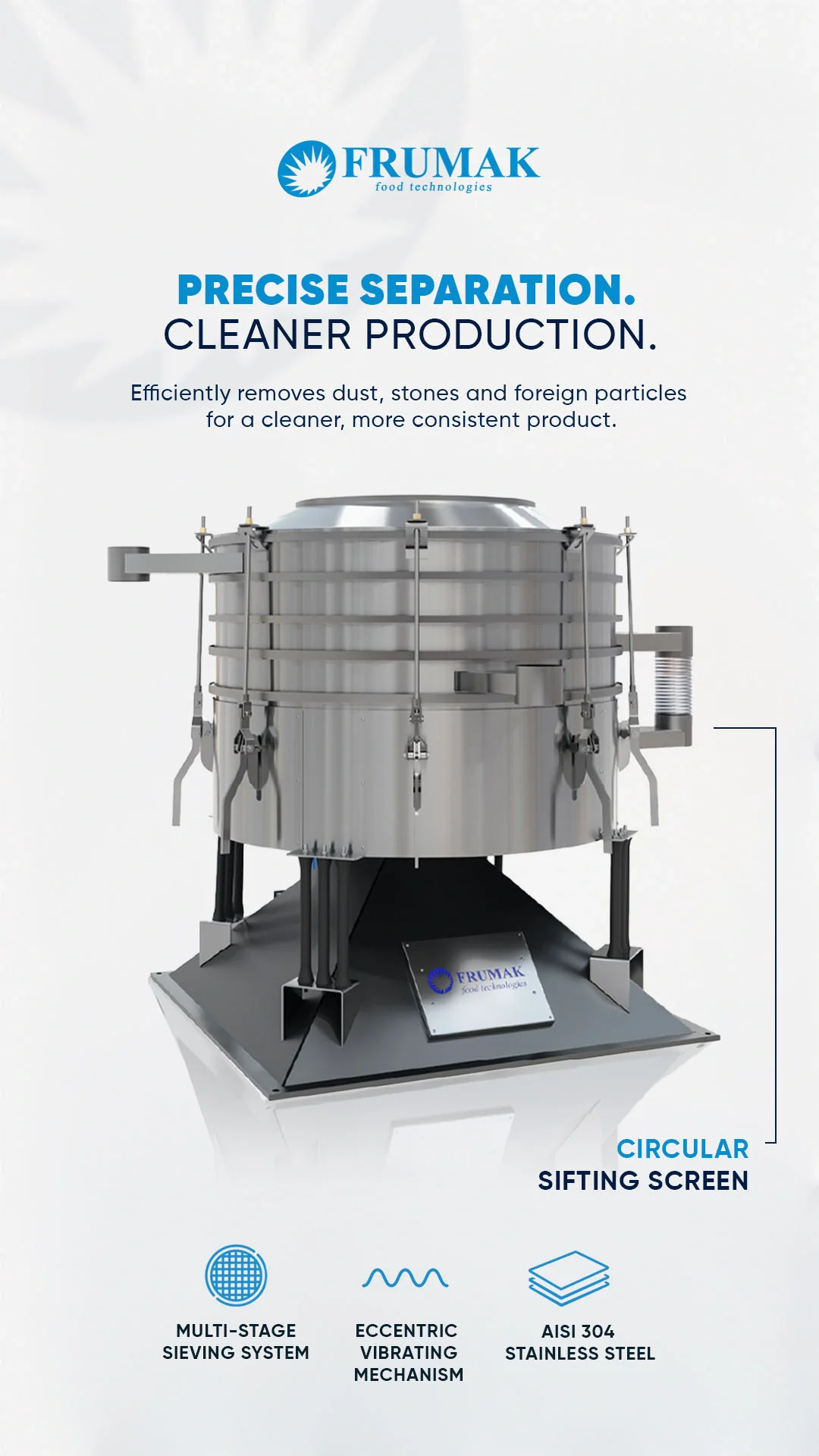
FRUMAK describes its circular vibrating screen as separating dust, stones and other unwanted material from granular product. The brush drum screen uses a perforated drum and brushing arrangement to remove bran and dust from sesame. Collection of separated material and onward product transfer are part of the equipment discussion.
These machines should not automatically be treated as alternatives simply because both are screens. Explain the incoming sesame and the separation required at that stage. The FRUMAK brush drum also has a cooling application for roasted sesame; identify its purpose and position in your project.
| Equipment or stage | Duty to discuss | Question to resolve |
|---|---|---|
| Dehulling | Hull separation within the preparation scope | What incoming conditions apply to the proposed model? |
| Circular vibrating screen | Separation within granular product | Which separation will be evaluated with the sample? |
| Brush drum screen | Bran and dust removal or a defined cooling duty | Where is it installed and for which purpose? |
| Horizontal drying | Moisture reduction after washing | What condition is required by the next stage? |

Define transfers between wet and dry stages
White sesame processing includes dehulling and screening followed by brine treatment, rinsing and drying. Joining these stages with arrows is not a complete project definition. Transfers, utilities, drainage and maintenance access need to be considered with the building conditions.
The dryer is described for washed and dehulled sesame. Appropriate output conditions depend on the subsequent application. The target and its control method need to be established for the specific material and production requirement.
Inspect the separated material as well as the product
When evaluating separation equipment, ask where the removed material goes. Collection, removal and access for bran, dust and other separated material affect everyday operation. These points may occupy little space in a capacity table but deserve a clear position in the operating plan.
A sample review can consider the incoming material, processed sesame and separated stream together. This gives more information than a general visual impression of cleaner product. Agree the evaluation method and acceptance criteria; broad catalogue language should not be read as identical performance for every incoming batch.
Keep the sesame-specific application boundary clear
FRUMAK explicitly states that its sesame processing line is not suitable for other seeds. Similar seed size is not a basis for assuming compatibility. If another material is planned, raise it as a separate requirement outside the currently described sesame application.
Prepare the sesame source, samples, desired output, subsequent process and building information before requesting a quotation. Show each machine's duty alongside product transfer and separated streams. This creates a clearer basis for discussing both unnecessary equipment and potentially missing stages, without promising a single configuration for every application.
KEY POINTS
Before requesting a quotation
- Define the intended sesame output before choosing the configuration.
- Treat separation and drying equipment as distinct duties.
- Do not extend the stated sesame application to other seeds by assumption.
QUESTIONS AND ANSWERS
Frequently asked questions
Can the sesame line process other seeds?+
FRUMAK's official description says the line is sesame-specific and not suitable for other seeds. Any different raw material needs separate technical evaluation.
Are the vibrating screen and brush drum interchangeable?+
Their duties should not be assumed identical. The vibrating screen and brush drum have different stated separation functions, and their positions depend on the product and required result.
Can white sesame processing connect to tahini production?+
Roasting can be added to the white sesame process to continue toward tahini production. The required equipment and interfaces must be defined in the project scope.
Sources and product information
The following pages document product specifications and equipment scope. Capacity, product suitability and the final supply scope need to be agreed in a project-specific proposal.
- FRUMAK Sesame, Tahini and Halva Production Line
- FRUMAK Circular Vibrating Screen
- FRUMAK Brush Drum Screen
- FRUMAK Horizontal Sesame Dryer
Related articles
 04
Line planning 6 min read
Planning a tahini factory: Start with raw or processed sesame
Define a tahini project through sesame sourcing, drying, roasting, milling, filling and future expansion, with clear capacity and utility requirements.
Fatih Selvi24Machine selection 5 min read
Selecting Sesame Dehulling and Roasting Equipment as One Process
Plan sesame dehulling and roasting around the incoming seed, finished product and intermediate stages. Compare equipment with a practical process checklist.
Oğulcan Cağman 06
Process & product 5 min read
Halva production: Where automation ends and hand kneading begins
Define syrup preparation, whipping, tahini supply and hand kneading as separate parts of a halva project, with clear equipment and operator responsibilities.
Oğulcan Cağman