

Machine selection GUIDE 24
Selecting Sesame Dehulling and Roasting Equipment as One Process
Plan sesame dehulling and roasting around the incoming seed, finished product and intermediate stages. Compare equipment with a practical process checklist.
Assess sesame dehulling and roasting against the finished product, rather than selecting two machines in isolation. White sesame, sesame prepared for tahini and sesame intended for other uses can require different process scopes. Define the incoming material and the intended saleable product first, then map cleaning, dehulling, intermediate operations, drying and roasting where required. Balanced process conditions and trials using representative sesame provide a stronger basis for purchase than matching catalogue capacities alone.
A sesame-processing investment involves more than choosing a dehuller and a roaster. The intermediate stages, transfer arrangements and condition of the material entering each machine determine how the factory will operate.
FRUMAK's line description distinguishes white sesame, simit sesame, tahini and halva processes. Put that product distinction on the first page of the enquiry, so the quoted scope serves the intended output.

1. Decide which sesame product will leave the factory
Start with the saleable product and its packaging. For tahini, purchasing prepared sesame and processing raw sesame on site produce different equipment requirements. In one case upstream operations belong in the supply chain; in the other they form part of the factory project. Material acceptance and capacity calculations should reflect that choice.
FRUMAK discusses simit sesame and tahini as separate processes. Do not assume one configuration automatically prepares both through the same route. If switching between products is required, show where the flow separates, which equipment is shared and what operator actions are involved.
- Will incoming sesame be raw, cleaned or already dehulled?
- Is the finished product white sesame, tahini or another sesame product?
- Has any expectation to process other seeds been identified as a separate requirement?
2. Make the sesame samples representative
Identify the batch associated with each sample sent for assessment. If normal supply involves materially different sources, explain those differences rather than presenting one carefully selected bag as representative of every delivery. The trial should help define which incoming-material characteristics need to be monitored.
Discuss sampling of the incoming material, processed sesame and separated streams. Relevant observations may include the dehulling result, visible breakage, separated material and suitability for the intended next stage. Do not assume universal acceptance percentages. Agree criteria through the product specification and the planned technical evaluation.
3. Make the stages between the main machines explicit
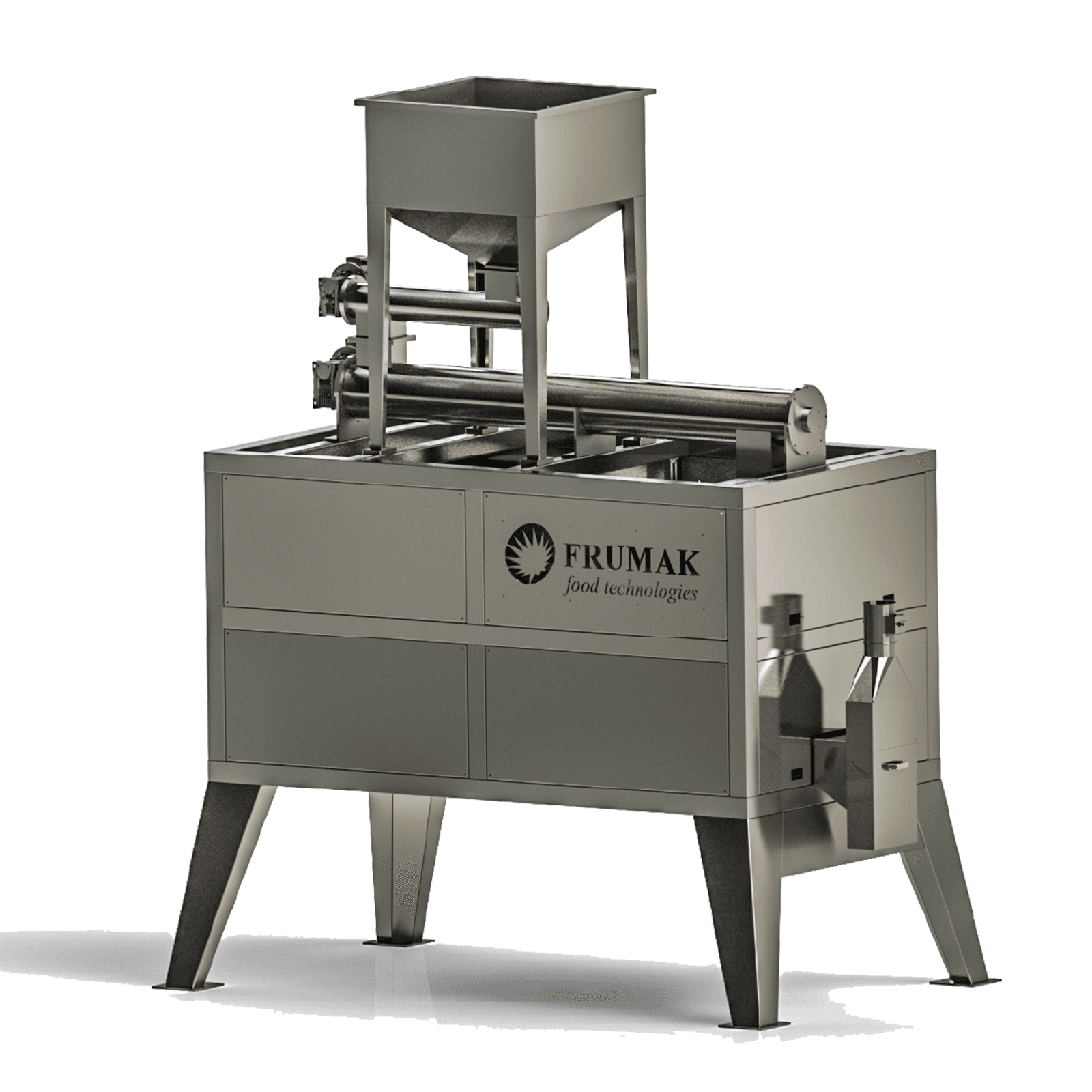
Incomplete definition between dehulling and roasting can leave equipment requirements unresolved. FRUMAK's line explanation associates the relevant sesame processes with cleaning, screening, rinsing and drying stages. Determine which operations belong in your project, how they connect and the basis on which each capacity is stated.
Two machines showing the same kilograms-per-hour figure do not automatically form a balanced line. Establish whether each rating refers to incoming or outgoing material, its condition and the operating assumptions. In particular, record a stage's discharge conditions alongside the following stage's required feed conditions.
| Process interface | Question to resolve | Project information |
|---|---|---|
| Incoming sesame to dehulling | How is the feed defined? | Sample and material-acceptance brief |
| Dehulling to screening | Where do separated streams go? | Product and side-stream diagram |
| Intermediate stages to drying | What are the feeding conditions? | Material condition and capacity basis |
| Drying to roasting | Do outlet and inlet requirements match? | Combined process assessment |
| Roasting to the next stage | Are cooling and transfer included? | Layout and equipment scope |
4. Define the roasting objective beyond a colour description
Colour can be part of product assessment, but words such as light or dark do not provide a complete purchasing specification. Agree the reference sample, measurement methods and point in the process at which the sample will be judged. The factory's intended finished product should guide the trial.
FRUMAK describes a staged, continuous roasting arrangement. Treat this as an explanation of the equipment concept, not as a universal operating recipe for every sesame batch. Discuss project-specific adjustment ranges, observation points and the operating instructions to be delivered with the system.
5. Request a boundary schedule as well as a machine list
Check transfers, product collection points, service connections and access for maintenance. When discussing water, steam, air or electricity, separate pressure, flow and power. Request written clarification rather than transferring an ambiguous catalogue entry directly into a site utility calculation.
The enquiry should connect your sesame samples, accepted finished product and trial-record format. If only one machine is being added to an existing line, provide upstream and downstream equipment information. This allows the suitability of the individual unit and the adequacy of the overall process to be assessed separately.
KEY POINTS
Before requesting a quotation
- Define the saleable product before finalising the equipment scope.
- Assess dehulling, intermediate processing and roasting on one flow diagram.
- Connect representative sesame samples with written acceptance criteria.
QUESTIONS AND ANSWERS
Frequently asked questions
Does tahini production always require an in-house dehulling line?+
FRUMAK's line description identifies prepared-sesame supply and an in-house sesame-processing line as possible starting points. The choice depends on the supply model, intended product and investment scope.
Do equal dehulling and roasting ratings prove the line is balanced?+
No. Each rating must be tied to incoming or outgoing material, material condition and operating assumptions. Intermediate operations and transfer arrangements also need assessment.
Can the sesame line process other seeds?+
FRUMAK describes the current line as sesame-specific. Suitability for another seed should not be assumed; request a separate technical review using representative material.
Sources and product information
The following pages document product specifications and equipment scope. Capacity, product suitability and the final supply scope need to be agreed in a project-specific proposal.
- FRUMAK | Sesame, Tahini and Halva Production Line
- FRUMAK | Sesame Roasting Unit
- FRUMAK | Sesame Dehulling Machine technical table
Related articles
 04
Line planning 6 min read
Planning a tahini factory: Start with raw or processed sesame
Define a tahini project through sesame sourcing, drying, roasting, milling, filling and future expansion, with clear capacity and utility requirements.
Fatih Selvi 05
Process & product 5 min read
Sesame processing stages and the boundaries of each machine
Understand sesame dehulling, screening, rinsing and drying as separate duties, and define the right scope for white sesame, simit sesame or tahini input.
Cansu Yören 06
Process & product 5 min read
Halva production: Where automation ends and hand kneading begins
Define syrup preparation, whipping, tahini supply and hand kneading as separate parts of a halva project, with clear equipment and operator responsibilities.
Oğulcan Cağman