

Process & product GUIDE 06
Halva production: Where automation ends and hand kneading begins
Define syrup preparation, whipping, tahini supply and hand kneading as separate parts of a halva project, with clear equipment and operator responsibilities.
A halva project should distinguish automation for syrup preparation and whipping from the final kneading operation. FRUMAK describes its halva unit as a semi-continuous system with two syrup vessels and an automatic whipping mixer. Its line description specifies hand-kneaded halva. Therefore, define automated operations, operator duties and the tahini supply boundary explicitly rather than assuming that the offer includes a fully automatic halva factory.
Automation is not a sufficiently precise description of a halva line. Preparing syrup, transferring it, whipping it and kneading the product are different operations. Automating some stages does not establish that every other stage is automatically included or automated.
FRUMAK's official descriptions provide a useful scope boundary: controlled preparation and whipping are described for the unit, while the offered halva approach includes hand kneading. The project should coordinate equipment, people and product flow around that stated boundary.
Identify exactly what the halva unit supplies
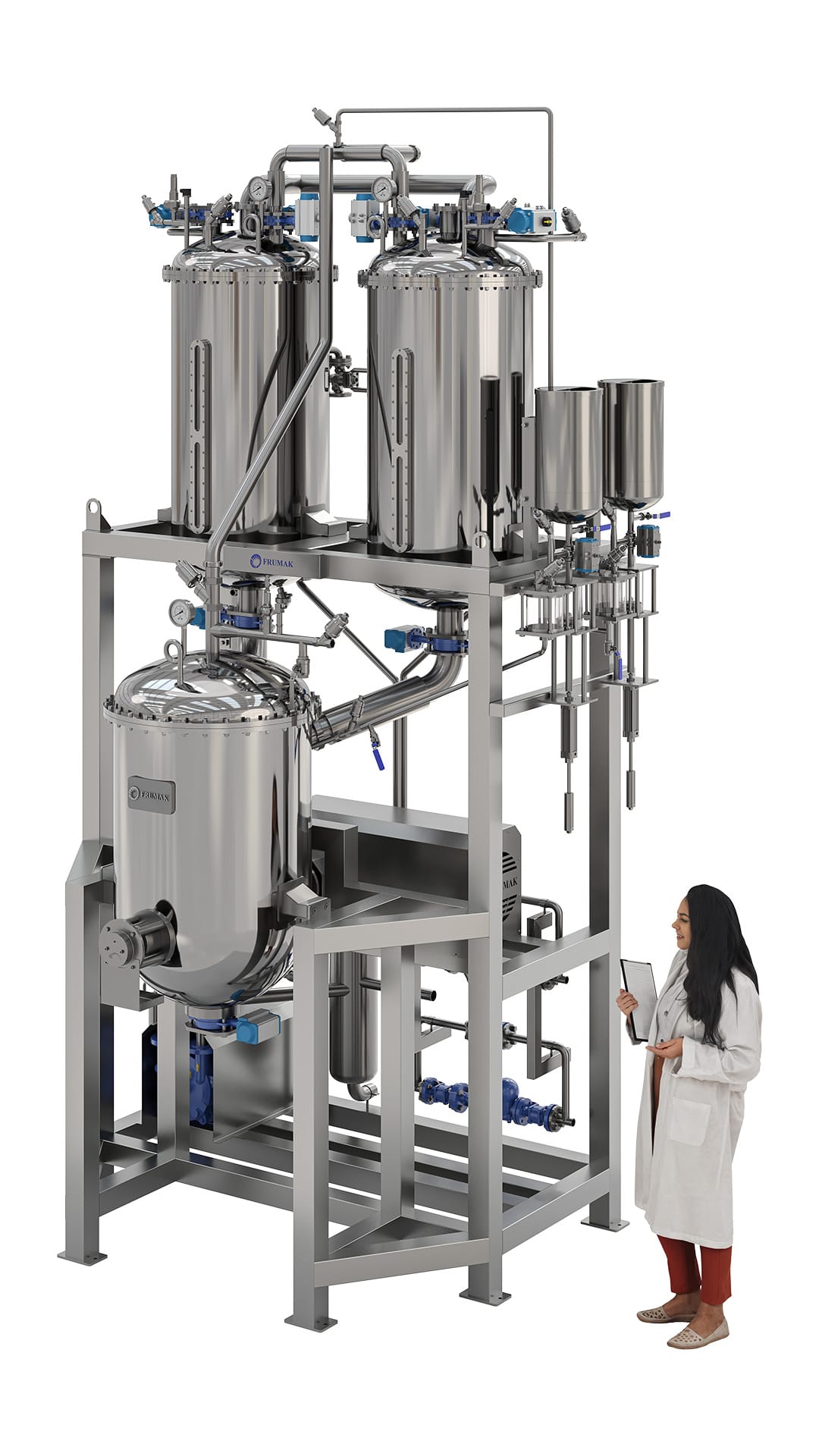
The equipment includes two sugar syrup vessels and an automatic whipping mixer. Controlled syrup intake, vessel processing, ingredient addition and transfer to the mixer form the described sequence. Speed and time control at the mixer also raise practical questions about which decisions remain with the operator.
Ask what starts each automatic operation and what the operator must do before it begins. Ingredient preparation, recipe selection, starting a cycle and handling discharged product are separate responsibilities. Follow the material from entry to exit rather than accepting a recipe name on a screen as a complete scope definition.
Review the two-vessel arrangement against the working day
FRUMAK describes an arrangement in which syrup preparation can take place while another portion is being whipped. It calls the system semi-continuous. That equipment arrangement is not, by itself, a guarantee of a particular factory output. Downstream kneading and the operating team's ability to receive product must be considered together.
Map syrup preparation, whipping, discharge and downstream readiness in sequence. Discuss how the unit is managed when the next operation is delayed. This gives a more useful basis for evaluation than vessel count alone.
| Operation | Boundary to clarify | Information to request |
|---|---|---|
| Syrup preparation | From ingredient entry to prepared syrup | Feeding and recipe functions |
| Whipping | Automatic speed, time and discharge operations | Controls and operator task list |
| Tahini supply | Purchased tahini or on-site production | Incoming material and interface definition |
| Kneading | The hand-operated production stage | Work area and transfer plan |
| Packaging | Included downstream activities | Packaging and responsibility schedule |
State where the tahini comes from
A halva project can be discussed around purchased tahini or tahini produced at the same site. Those starting points do not imply the same equipment list. FRUMAK treats tahini and halva production as separate scopes. Sesame preparation and tahini manufacture should not be assumed to come with a halva unit quotation.
An existing tahini producer should share the current outlet condition, transfer arrangement and production schedule. A new investor can evaluate purchased tahini and integrated manufacture separately. The selected route also determines the material used in trials, making the ingredient definition an important part of acceptance planning.
Make hand kneading visible in the layout
The described hand-kneading boundary influences layout and operating plans. Show how prepared material reaches the working area, how staff access it and how product moves onward. Avoid generic staffing or output assumptions; assess the intended product and the business's working arrangement.
Do not let manual work disappear behind an attractive demonstration of automatic stages. Trace a batch through the whole proposed process with the operating team. Identify waiting points, material holding and activities that depend on another section. The final work arrangement requires appropriate technical review, but these questions can be raised while scope is still being defined.
Go beyond a whipping demonstration in acceptance planning
State where project acceptance ends. Discharging an intermediate product and assessing packaged halva can represent different contractual scopes. Agree trial ingredients, staffing and evaluation methods according to the actual boundary. Formulation settings and food safety checks remain matters for the responsible technical and quality teams.
Training can cover recipe changes, interruptions and restarting as well as normal operation. Include documentation, maintenance access and spare parts information in the delivery schedule. The investment review then addresses your team's ability to make the defined product with the agreed process, rather than merely confirming that equipment runs.
KEY POINTS
Before requesting a quotation
- Separate syrup and whipping automation from final kneading.
- Define purchased tahini and integrated production as different starting scopes.
- Connect acceptance to equipment boundaries and operator duties.
QUESTIONS AND ANSWERS
Frequently asked questions
Does the described FRUMAK line include fully automatic kneading?+
The current official description specifies hand-kneaded halva. Automation for syrup preparation and whipping should not be interpreted as automatic final kneading.
What are the main components of the halva unit?+
The FRUMAK unit includes two sugar syrup vessels and an automatic whipping mixer. Any additional equipment should be shown separately in the proposal.
Must we manufacture our own tahini?+
Purchased tahini and on-site tahini production can be evaluated as separate starting scenarios. If tahini manufacture is required, it is an additional scope rather than an assumed part of the halva unit.
Sources and product information
The following pages document product specifications and equipment scope. Capacity, product suitability and the final supply scope need to be agreed in a project-specific proposal.
Editorial principlesRelated articles
 04
Line planning 6 min read
Planning a tahini factory: Start with raw or processed sesame
Define a tahini project through sesame sourcing, drying, roasting, milling, filling and future expansion, with clear capacity and utility requirements.
Fatih Selvi24Machine selection 5 min read
Selecting Sesame Dehulling and Roasting Equipment as One Process
Plan sesame dehulling and roasting around the incoming seed, finished product and intermediate stages. Compare equipment with a practical process checklist.
Oğulcan Cağman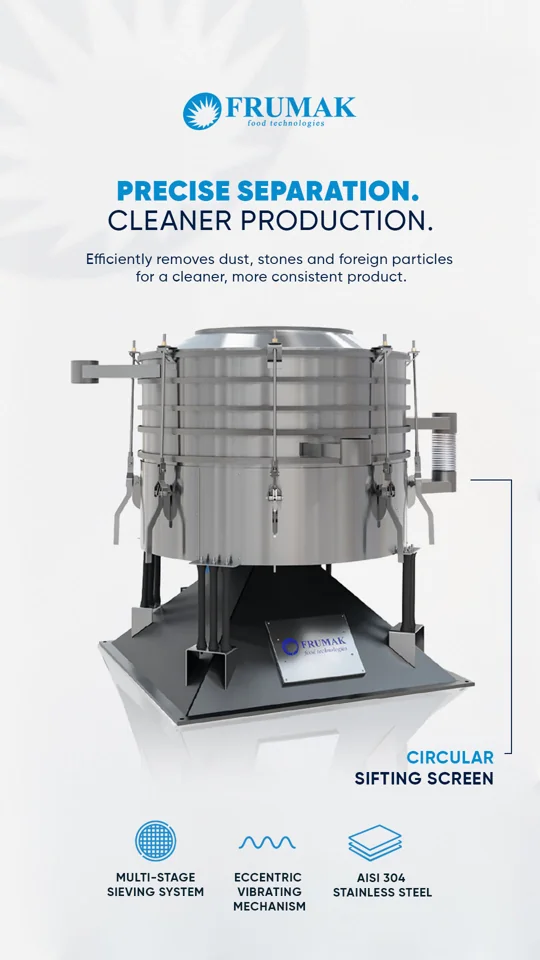 05
Process & product 5 min read
Sesame processing stages and the boundaries of each machine
Understand sesame dehulling, screening, rinsing and drying as separate duties, and define the right scope for white sesame, simit sesame or tahini input.
Cansu Yören