

Investment guides GUIDE 28
Production Line Cost: Compare Quotations on an Equivalent Scope
Compare production line costs beyond the machine price. Align equipment, utilities, installation, acceptance and operating assumptions before choosing a quote.
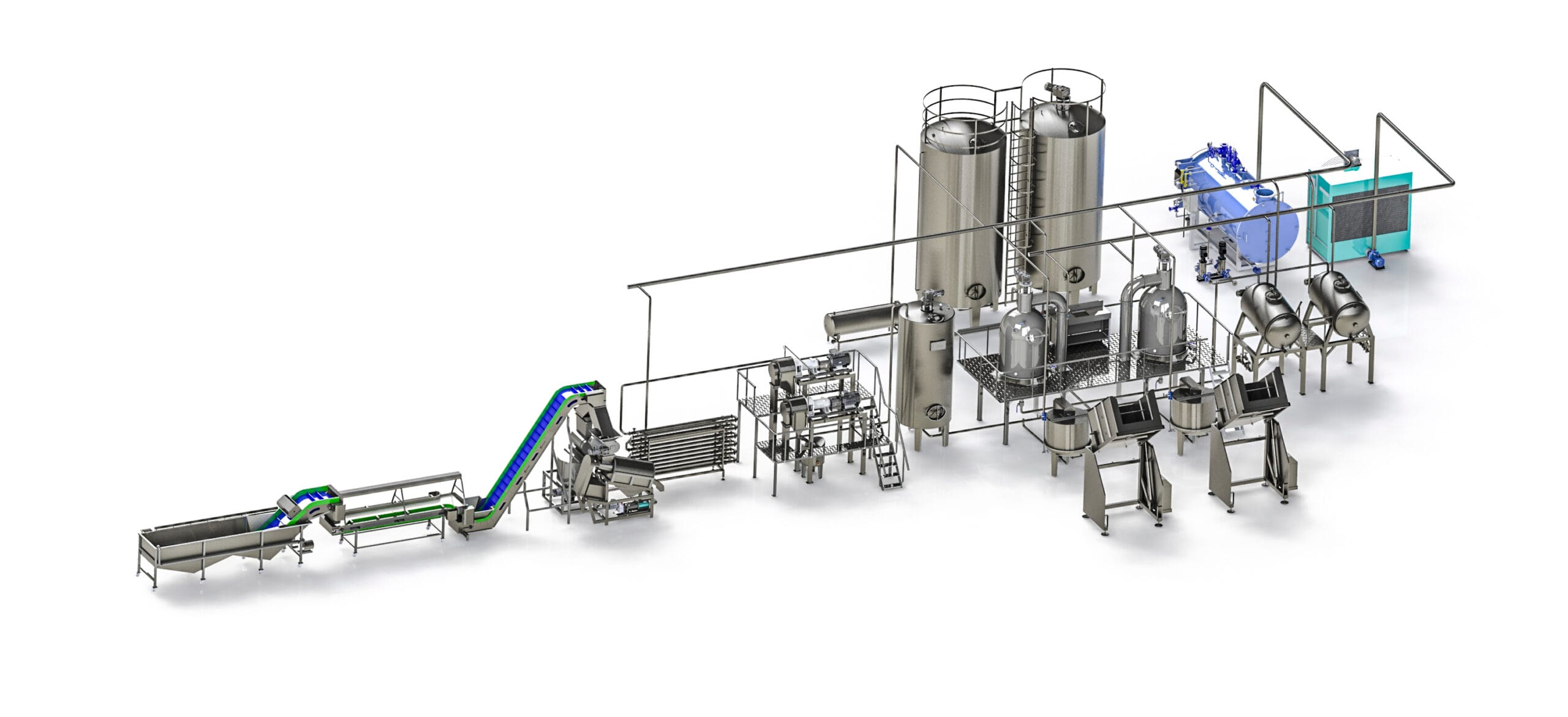
The first step in comparing production line costs is to make quotation scopes equivalent. Assess the equipment price alongside transfers, utilities, transport, installation, testing, training and initial spares. Evaluate operating expenses using the same product mix, capacity and working schedule. Missing items should be marked as unresolved, not assigned a zero cost. This reveals what the initial price actually includes and which additional decisions are necessary before the investment budget is credible.
Two offers can use the same production-line title while covering different boundaries. One may include connections between machines; another may leave those works to a local contractor. Comparing only the headline totals hides the difference.
This is a practical procurement method, not a price list or return-on-investment promise. Numerical examples are hypothetical and do not represent FRUMAK prices, energy tariffs or commercial terms.

1. Start with a common scope schedule
Define the required production flow from the incoming-material boundary to the finished-product boundary. Assess primary machines, transfer equipment, intermediate vessels, controls and packaging interfaces within that scope. A machine count alone does not show that two systems complete the same job.
Mark each item included, excluded or awaiting clarification. An item absent from the text should not automatically be treated as included. Work supplied by your own team or another contractor also needs to remain visible. This makes it easier to distinguish differences in equipment from differences in responsibility.
| Cost area | Scope to check | Comparison note |
|---|---|---|
| Primary equipment | Model, configuration and product coverage | Verify an equivalent production objective |
| Line connections | Transfers, piping and control interfaces | Identify site boundaries |
| Utilities | Generation, distribution and final connections | Separate customer-supplied works |
| Logistics and installation | Packing, transport, unloading and assembly | Define the delivery point |
| Acceptance and training | Test content, records and attendance | Compare content as well as duration |
| Initial spares | Parts list and recommendation basis | Confirm what the initial order includes |
2. Add the project costs outside the machine order
Building preparation, relocation of existing equipment, utility upgrades and installation sequencing may need separate budget lines. Their relevance depends on the actual site. Instead of applying the same extra-cost percentage to every project, identify the required work and the basis of each estimate.
Compare taxation, financing, payment timing and currency assumptions consistently with the support of your commercial and financial specialists. Keep binding quotations separate from planning estimates. Present unresolved costs with their assumptions rather than burying them in an apparently precise total. Decision makers should be able to see which figures still require confirmation.
3. Link operating costs to a defined production scenario
Energy, water, consumables, planned maintenance and staffing should be evaluated against the same product mix and working schedule. Installed motor power is not automatically the energy consumed during every operating hour. Distinguish measured demand, a supplier's conditional figure and an unverified assumption.
Illustrative example only: if average electrical use during a process is assumed to be 40 kWh per operating hour and the assumed tariff is TRY 5 per kWh, that electricity item equals TRY 200 per hour. These are not current tariff or equipment-consumption claims. If heating, cooling and other inputs are excluded, the result should not be labelled total production cost.
4. Compare uncertainty and utilisation, not just totals
Apply the same annual operating hours when comparing alternatives. The importance of initial investment and particular operating costs can change with utilisation. Where demand is uncertain, show low, base and higher-use cases rather than relying on one optimistic production forecast.
Ask about changeover time, format parts and external services. Establish their quantities and frequency before assigning a financial effect. A payback calculation based only on equipment price and an assumed margin can look more certain than the project warrants if raw material, packaging, working capital and other relevant expenditure are omitted.
5. Close scope questions before the final decision
Use the final supplier meeting to resolve open items as well as discuss price. The target product, accepted capacity conditions, delivered configuration, test plan and site responsibilities should appear in the same quotation revision. Ensure agreed changes are reflected in its attachments rather than left only in a separate conversation.
FRUMAK's product pages introduce solution groups; the price and boundaries of a particular investment are established through the project enquiry. A complete request enables more specific answers. The decision file should explain both which offer costs less and what work that amount actually completes.
- Do the offers use the same delivery and scope boundaries?
- Does every excluded task have an identified owner?
- Are operating figures based on the same recipes, hours and output?
KEY POINTS
Before requesting a quotation
- Align scope and delivery boundaries before comparing prices.
- Treat missing cost information as uncertainty, not zero.
- Use matching product, time and utilisation assumptions for operating comparisons.
QUESTIONS AND ANSWERS
Frequently asked questions
Why is a single starting price insufficient for a production line?+
Product, capacity, automation, packaging and site scope all affect what is being purchased. Without those details, a figure describes an unclear assumption rather than a comparable investment.
Should installation or piping be assumed included when not mentioned?+
No. Clarify the boundaries and responsibilities in writing. Show missing or unresolved work separately in the comparison rather than assigning it zero cost.
Can operating cost be calculated from motor power alone?+
Installed power differs from measured consumption. Define working conditions, duration and the other relevant energy, water, maintenance and consumable inputs, then state the calculation boundary.
Sources and product information
The following pages document product specifications and equipment scope. Capacity, product suitability and the final supply scope need to be agreed in a project-specific proposal.
Editorial principlesRelated articles
 01
Line planning 5 min read
Planning a turnkey food factory: From equipment list to working production
Define your food factory project through product requirements, equipment scope, utilities, layout and acceptance criteria before comparing turnkey proposals.
Fatih Selvi27Investment guides 5 min read
Food Factory Layout: Plan Access and Utilities Before Ordering Equipment
Plan food factory layout around product flow, maintenance access, equipment delivery routes and utilities. Prepare a practical site brief before ordering.
Oğulcan Cağman 26
Investment guides 5 min read
Calculating Production Line Capacity: From Shift Time to Accepted Output
Calculate production line capacity using net shift time, complete batch cycles and bottlenecks. Separate catalogue ratings from finished output with examples.
Cansu Yören