

Investment guides GUIDE 26
Calculating Production Line Capacity: From Shift Time to Accepted Output
Calculate production line capacity using net shift time, complete batch cycles and bottlenecks. Separate catalogue ratings from finished output with examples.
Production line capacity is not the rating of its fastest machine. Start with the required quantity of accepted finished product and the time genuinely available for production. Convert every process stage to the same product and time basis, using complete cycles for batch equipment and defined throughput for continuous stages. Make changeovers, cleaning and release activities visible in the schedule. The calculation establishes what a capacity trial must demonstrate; it does not replace that trial.
A cooker may be discussed in litres per hour, fruit-processing equipment in kilograms per hour and filling in packs per hour. Placing these numbers alongside one another does not yet constitute a line-capacity calculation. The product conversions and operating schedule must also be explained.
All numerical examples below are illustrative assumptions, not FRUMAK equipment ratings or output guarantees. Replace them with measured or agreed project data.

1. Define accepted daily output and available time
Start with the product plan: codes, daily quantities and packaging mix. Show the peak-season requirement separately from the average day. Distinguish established demand from possible future growth so reviewers can see which assumption is driving the investment.
Illustrative example: 6,000 kilograms of accepted product within six net production hours requires an average of 1,000 kilograms per hour. If the shift lasts eight hours but two are allocated elsewhere, dividing by eight answers a different question. List the activities excluded from net time and avoid deducting the same loss again in a second efficiency allowance.
2. Put every stage on the same product basis
Incoming fruit mass is not identical to concentrated finished-product mass, and recipe additions can change the balance. Every capacity entry should therefore state what material is measured and at which point. Intermediate conversion, finished output and quantity per pack belong in separate calculation steps.
Illustrative example: if 1,000 kilograms per hour of finished product is all packed into 500-gram containers, the arithmetic requirement is 2,000 accepted packs per hour. This does not select the filler on its own. Explain the operating arrangement and handling of unacceptable packs. Where litres must be converted to kilograms, use the relevant density rather than assuming one litre equals one kilogram.
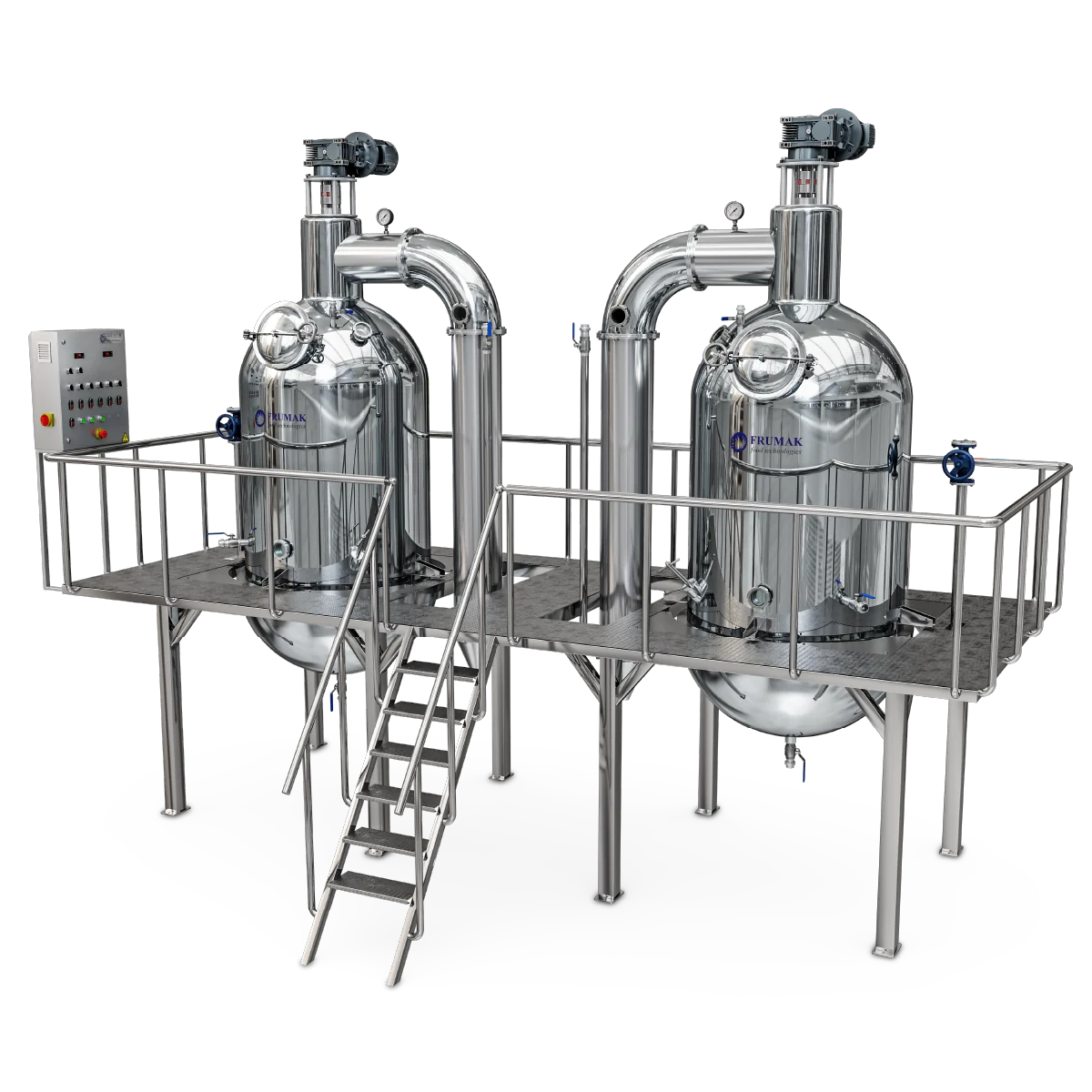
3. Count the complete cycle for batch equipment
Loading, processing, checks, discharge and preparation for the next batch all belong in the cycle. If an activity overlaps with work in another vessel, show that overlap explicitly. Counting the same interval both inside the cycle and again as line downtime understates output; omitting it altogether overstates it.
Illustrative example: a unit delivering 500 kilograms of accepted product every complete 75-minute cycle averages 400 kilograms per hour. Yet within a 360-minute window, only four complete cycles finish if production cannot continue beyond that window, giving 2,000 kilograms. Distinguish the long-run average rate from completed output within a specific shift.
4. Compare constraints under matching conditions
Once stages are expressed on a common basis, investigate the limiting operation. A simple minimum figure may still be insufficient where buffers or different operating hours are involved. A timeline showing when each stage works can explain more than a table of nominal rates.
- Do all values refer to the same recipe and material condition?
- Are usable buffer quantities and waiting conditions defined?
- Have scheduling alternatives been considered alongside additional equipment?
| Stage | Assumed common-basis capacity | Question |
|---|---|---|
| Preparation | 1,200 kg/hour finished-product equivalent | Can it feed the following stage consistently? |
| Processing | 1,000 kg/hour finished-product equivalent | Are product transitions included? |
| Filling and closing | 900 kg/hour finished-product equivalent | Are enough packing hours available? |
| Daily target | 6,000 kg / 6 hours = 1,000 kg/hour | The target is not met under these assumptions |
5. Validate scenarios rather than presenting one number
Prepare separate cases for the main product, the smallest pack and a day with frequent changes. Show the target, available time, conversion assumptions and limiting operation in each. If future growth is included, state the expected product mix and timing behind it.
Label every input as a measured site value, a supplier-defined figure or an unverified assumption. FRUMAK's technical pages provide equipment information, but its application to your recipe and complete line must be established in the project quotation. The calculation is most useful when it identifies exactly which assumptions the acceptance trial needs to confirm.
KEY POINTS
Before requesting a quotation
- Start with accepted-product demand and a defined production window.
- Convert litres, kilograms and packs using explicit assumptions.
- Keep average rate, complete-batch count and finished line output distinct.
QUESTIONS AND ANSWERS
Frequently asked questions
Should individual machine capacities be added to calculate the line?+
No. Adding ratings for sequential stages does not give finished output. Compare them on a common material and time basis, considering conversions, buffers and operating schedules.
Does an eight-hour shift mean eight hours of production?+
Not necessarily. Identify preparation, cleaning, changes and planned checks. State which interval the calculation uses and which losses are already included.
Is catalogue capacity sufficient for the quotation?+
It is a starting point. Confirm the product, conditions and measurement boundary behind the figure, then establish a representative trial or agreed acceptance plan for the required output.
Sources and product information
The following pages document product specifications and equipment scope. Capacity, product suitability and the final supply scope need to be agreed in a project-specific proposal.
Editorial principlesRelated articles
 02
Line planning 5 min read
Choosing a jam and marmalade line starts with the fruit's final form
Compare jam and marmalade lines through fruit form, raw material supply, vacuum cooking, filling compatibility, utilities and realistic product changeovers.
Cansu Yören 29
Investment guides 6 min read
Choosing a Food Machinery Supplier: An Evidence-Based Checklist
Compare food machinery suppliers through product trials, technical scope, service and handover records. Use a neutral checklist to evaluate equivalent offers.
Cansu Yören 30
Investment guides 5 min read
Pilot Trials, FAT and SAT: Planning Production Line Acceptance
Give pilot trials, factory acceptance and site acceptance distinct objectives. Plan product samples, measurements, open items and handover records before testing.
Oğulcan Cağman